Swimming
Open-water swimming guide to Lanzarote
What to know before swimming open water in Lanzarote: sea conditions, sighting, wetsuits, safety and the swim calendar.
Updated on
Lanzarote is a very attractive place for open-water swimming, but clear water should not be confused with easy water. The Atlantic changes with wind, current, tide and coastline orientation. A well-chosen swim can be excellent; a poorly prepared one can feel long very quickly.
Choosing a distance
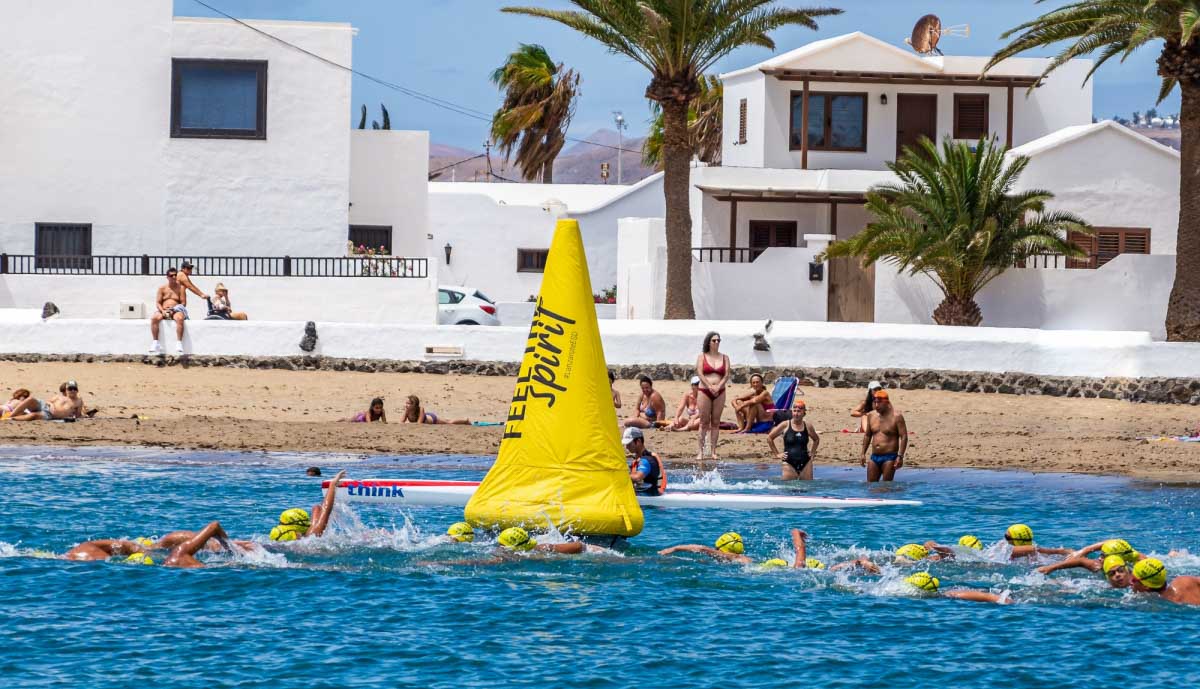
If you come from pool swimming, start with short or medium distances. An 800 m or 1,500 m swim lets you understand starts, groups, buoys, bilateral breathing and contact with other swimmers without taking on too much stress. On this island the calendar runs from the 1,200 m in Arrecife bay to the 2.6 km of El Río, so the natural progression is from a short swim in sheltered water to the inter-island crossing. Distances of 3.8 km or 5 km require another level of preparation (pre-race nutrition, tolerance of chop, pacing and sighting experience) and there is currently no race at that length in Lanzarote.
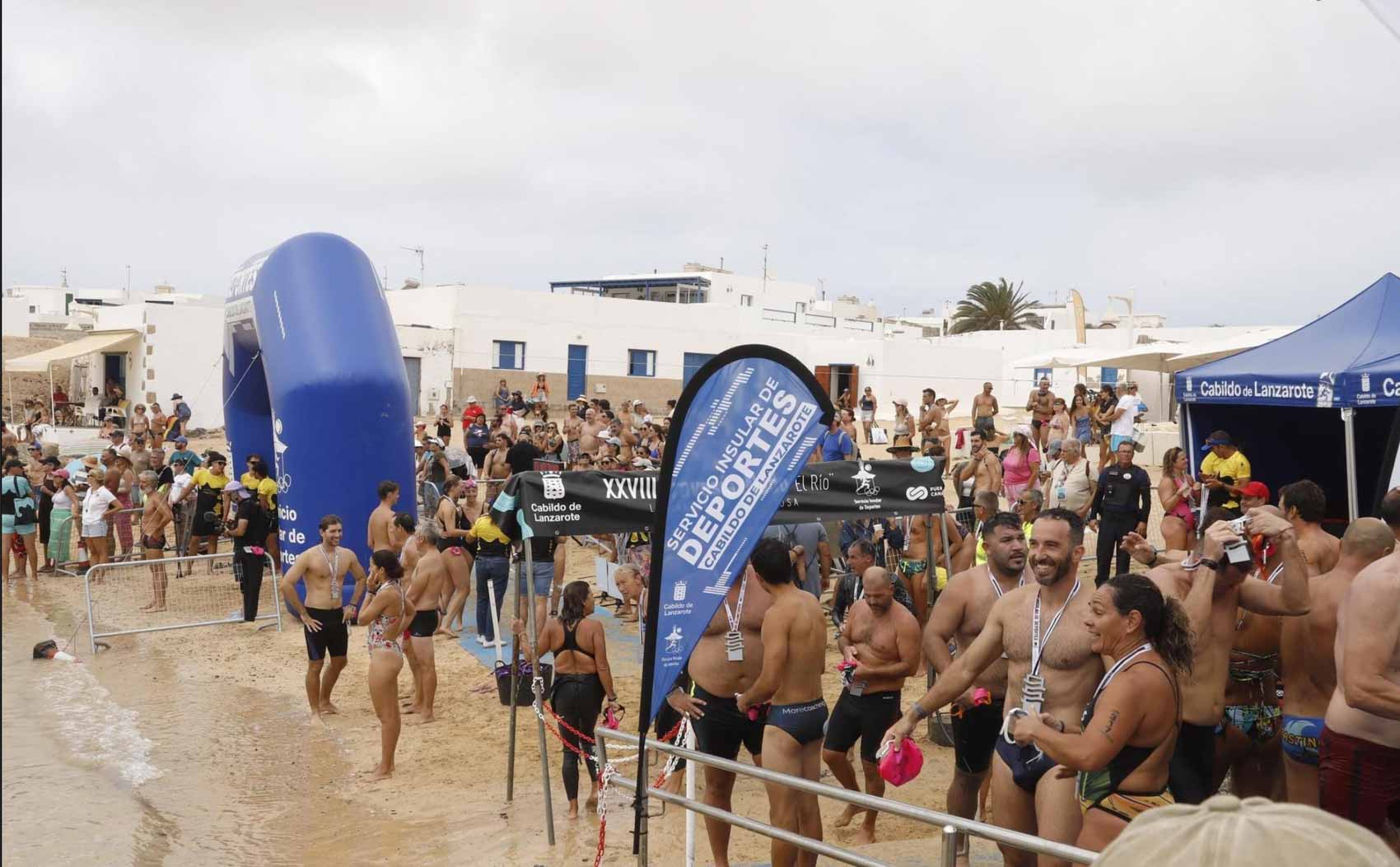
The San Ginés Open Water Swim in Arrecife bay, the Emmax Crossing at Playa Honda, El Reducto, Papagayo and El Río, between Lanzarote and La Graciosa, all offer different profiles. Do not choose only by how beautiful the beach looks. Check start, finish, currents, services, cut-off times and transport.
The Open Water Cup shapes the season
Most of the island’s swims are not standalone events. They form the XII Lanzarote Open Water Swimming Cup 2026, a five-stage series run by the Cabildo with shared rules and entry fees of 20, 12 and 8 euros depending on distance.
- 1 August. El Poril, La Tiñosa, Tías.
- 22 August. San Ginés, Arrecife.
- 29 August. Emmax Crossing, Playa Honda, San Bartolomé.
- 17 October. Alejandro Candela, Costa Teguise.
- 7 November. Papagayo Beaches Crossing, Yaiza.
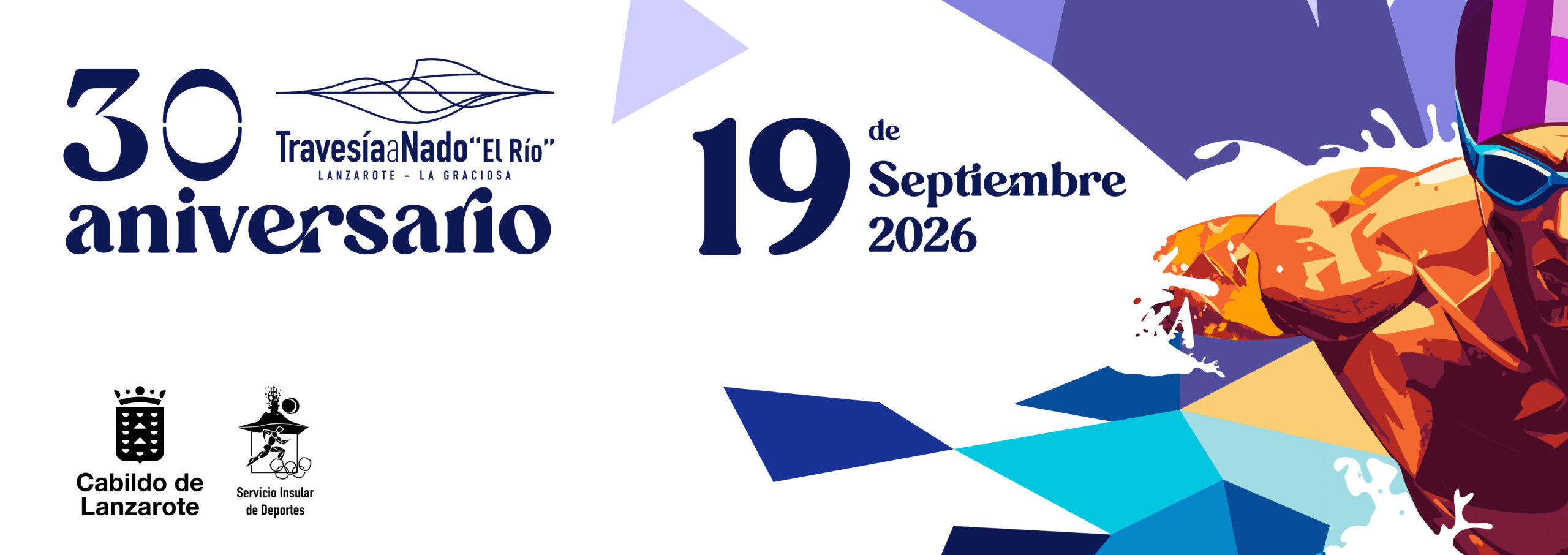
Reading it as a series makes planning easier. San Ginés is the way in, with 1,200 m in sheltered water, and from there you can link stages through to November without changing rules or entry process. The El Río Open Water Swim in September sits outside the series: it is the most iconic swim on the island and also the longest of the year, 2.6 km between Lanzarote and La Graciosa.
Wetsuit and water temperature
Water temperature can be pleasant, but wetsuit use depends on rules, season and organiser decisions. If you use one, train in it first. A new wetsuit can rub the neck or shoulders and change body position. If you swim without one, practise breathing in the sea with temperature changes and small waves.
Safety
Never train open water alone if you do not know the area. Check flags, wind, currents and boat traffic. Use a safety buoy in training and choose lifeguarded beaches where possible. Lanzarote’s visibility helps, but it does not replace judgement.
Open-water swims and triathlon
For triathletes, an open-water swim is a very useful tool. It lets you practise starts, sighting and continuous pacing without transition pressure. It is worth knowing before you plan, though, that anyone preparing IRONMAN Lanzarote will not find a full-distance rehearsal on the island. There is no longer any 3.8 km swim in Lanzarote, and the longest race on the calendar is El Río at 2.6 km. That is enough to work on composure, sighting and steady pacing in open water, but the 3.8 km itself has to be built in training.
Supporters
Open-water swims are often friendly for spectators because start and finish areas are close to beaches or promenades. Still, check access, parking and timings. In point-to-point swims, it is not always easy to see both start and finish without transport.
How to progress
A good progression combines pool work, short sea sessions and a first controlled open-water event. Do not jump from comfortable 1,500 m pool swims to a long race without practising sighting, group starts and breathing in chop. If your final goal is a triathlon, use open-water swims as a rehearsal for calm: learning not to surge from nerves in the opening minutes can be worth more than saving a few seconds per hundred metres.